
Services · Bookkeeping & Accounting
Bookkeeping and accounting in Sarasota
Clean books. Clear picture. Better decisions. Accurate, up-to-date books are the foundation of good tax planning. We provide monthly bookkeeping and accounting services that keep your finances organized, your records audit-ready and your tax strategy on track.
- Year-round planning, not just April
- Based in Sarasota
- Reply within one business day

The short answer
Why does bookkeeping matter for taxes?
Your tax return can only be as accurate as the records behind it. Monthly bookkeeping keeps income and expenses categorized and reconciled to your bank accounts, so deductions are supported, estimated payments are based on real numbers, and year-end doesn’t start with a shoebox of receipts.
At a glance
- Monthly bookkeeping and reconciliation
- Financial statement preparation
- Cash flow monitoring
- Payroll processing
- Year-end close and tax-ready reports
What it covers
What bookkeeping & accounting includes
Monthly bookkeeping and reconciliation
Every bank and card account matched to the books each month.
Financial statement preparation
Profit and loss, balance sheet and the numbers your lender asks for.
Cash flow monitoring
Seeing what's coming in and going out before it becomes a problem.
Payroll processing
Paying your team and keeping payroll records and filings in order.
Year-end close and tax-ready reports
Books closed cleanly so your return starts from accurate numbers.
Clean-up and catch-up
Bringing months or years of untidy books back into order.
What monthly bookkeeping includes
Each month we categorize transactions, reconcile every bank and credit card account, review accounts receivable and payable, and produce a profit and loss statement and balance sheet you can actually read. When something looks off — a duplicate payment, a missing deposit, an expense in the wrong place — we flag it while it’s still easy to fix.
Because the books are current, your quarterly estimated payments come from real numbers instead of guesses, and planning conversations start from facts.
Because the books are current, your quarterly estimated payments come from real numbers instead of guesses, and planning conversations start from facts.

At a glance
Your month with us
Week 1
Bank and card feeds reviewed; transactions categorized.
Week 2
All accounts reconciled; questions sent to you in one batch.
Week 3
Profit and loss and balance sheet delivered.
Quarter-end
Estimated tax check and planning notes.
Records that stand up
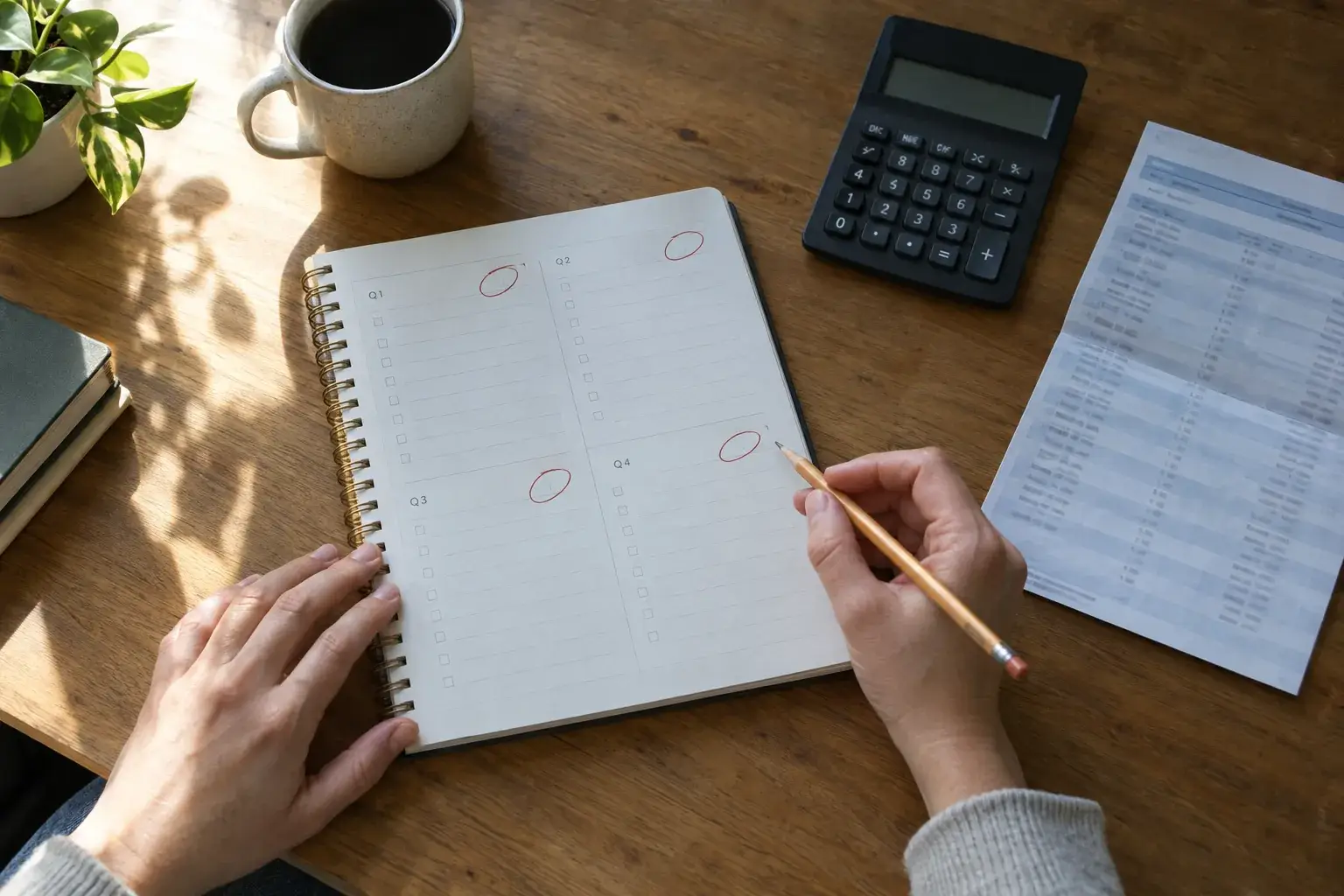
The IRS expects you to keep records that support the income, deductions and credits on your return, generally for at least three years after you file, and longer in some situations. Good bookkeeping makes that automatic: each expense ties to a receipt or invoice, each deposit to its source.
That matters most when someone asks — a lender reviewing your business, a buyer looking at your numbers, or an IRS notice asking you to support a deduction.
That matters most when someone asks — a lender reviewing your business, a buyer looking at your numbers, or an IRS notice asking you to support a deduction.
From books to tax plan
Bookkeeping and tax planning work best under one roof. When the people keeping your books also plan your taxes, year-end decisions — equipment purchases, retirement plan contributions, owner pay — get made with current numbers in hand, and the return starts from a clean, closed year.
If your books are behind, we start with a clean-up so the current year and the prior one are accurate, then keep them current month by month.
What we need from you, and what you get back. Read-only access to your business bank and card accounts (or monthly statements), copies of receipts and invoices as they happen, and quick answers to the handful of questions we send each month. In return you get reconciled accounts, a profit and loss statement and a balance sheet every month, a running view of cash, and a tax-ready set of books at year-end — so your return, your estimated payments and your planning all start from the same numbers.
Common mistakes
Mistakes we help you avoid
Catching up once a year
Reconciling twelve months at year-end is slower, costlier and more error-prone than reconciling one month at a time.
Uncategorized transactions
An “ask my accountant” pile at year-end usually hides deductions — or personal expenses that shouldn’t be deducted.
No receipts for expenses
A bank statement shows that you paid; a receipt or invoice shows what you paid for. Deductions need both.
Payroll records kept loosely
Employment tax records generally have to be kept at least four years. Missing filings bring penalties quickly.
Books that don't match the return
When the books and the return disagree, it’s hard to plan, borrow or sell. We close the books and file from the same numbers.
Who this is for
Small businesses without an in-house bookkeeper, owners whose books are behind, and businesses preparing for a loan, a sale or a tax-planning engagement.
Answers
Bookkeeping & Accounting: common questions
How often should my books be updated?
Monthly is the standard for most small businesses. It keeps reconciliations simple and gives you numbers you can use for estimated taxes and decisions.
How long should I keep business records?
Generally at least three years after you file the return they support, and longer in some cases, such as records for property you still own or employment tax records. The IRS publishes guidance on how long to keep records.
Can you clean up books that are months or years behind?
Yes. We start with a clean-up of the periods that matter for filing, then keep the books current month by month.
Do you work with QuickBooks?
Tell us what you use today. We’ll review your current setup in the first conversation and recommend whether to keep it or adjust it.
Is bookkeeping a deductible business expense?
Generally, yes. Ordinary and necessary costs of running your business, including bookkeeping and tax preparation for the business, are typically deductible.
Other services
Explore related services





Get started
Request a consultation
Tell us a little about your situation and we’ll be in touch within one business day.
- Call (941) 225-5455
- info@sarasotataxplanning.com
- By appointment only
Next step
Ready to pay less and plan more?
Schedule a consultation and let’s build a tax strategy that works for your life in Sarasota.